4:20 Every Day
When I was 8, my parents took me to one of those medical office buildings in suburban St. Louis. Uncomfortable furniture. Stale coffee. Old magazines. This was before cell phones, so they just sat there in their own worry for about two hours.
The woman brought me back and told my parents: "Your son has big problems."
She gave me an IQ test. A 20-point spread between the two halves represents a learning disability. I had a 70-point spread. She said it was the biggest they had ever seen. To use the parlance of the day, I was mentally retarded in some ways and genius in others.
My dad was 43. Successful entrepreneur. Used to bending the world to his will. So the obvious question: What do we do?
"Not much," she said. "You sort of have to meet your son where he is at."
That didn't make sense to my father. Because where I was at was a complete disaster.
So he quit his job. Sold his company. And for the next 18 years, he decided to change me for the world rather than try to change the world for me.
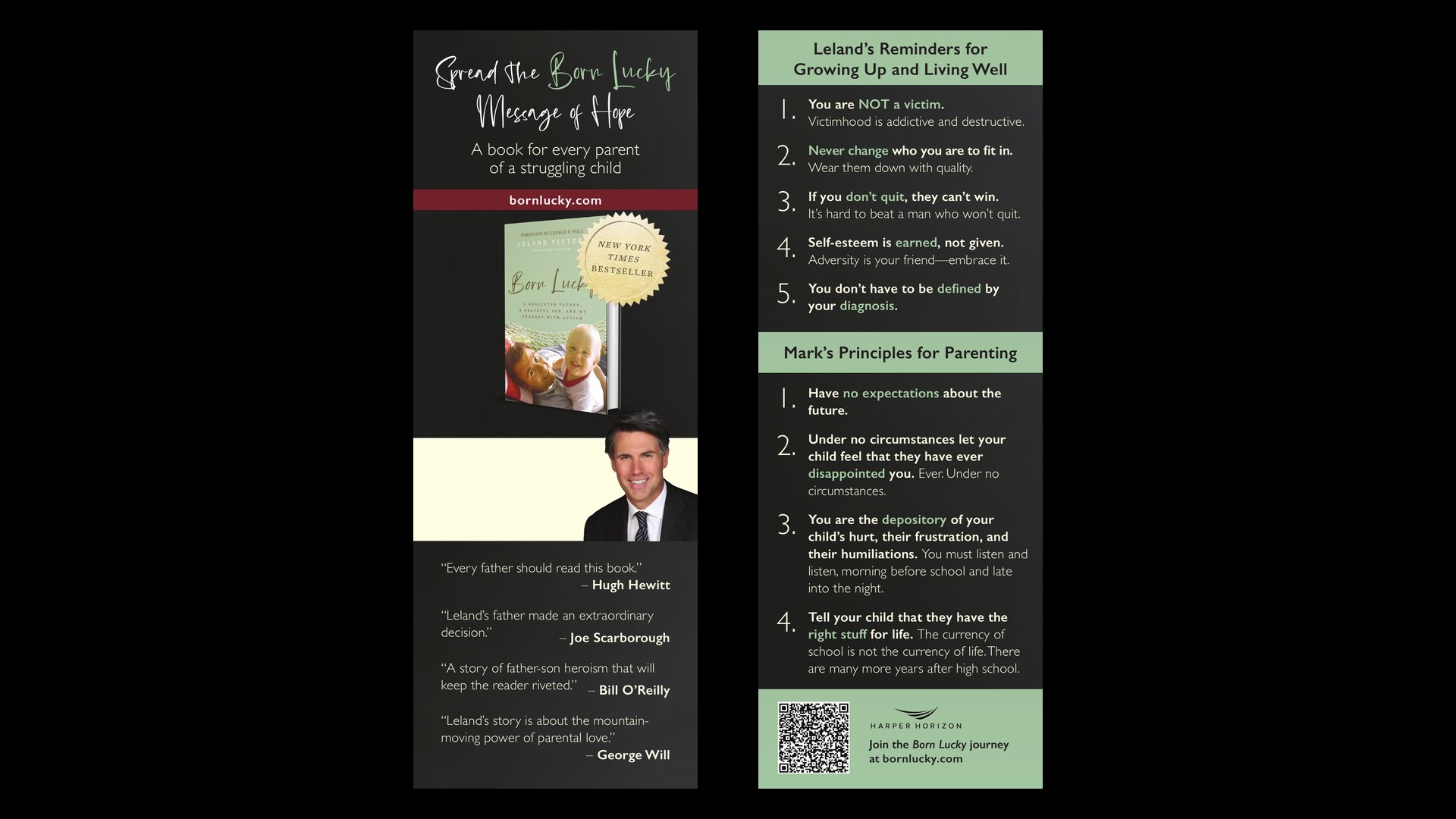
He started with push-ups. 200 a day, five days a week. Not because he wanted to torture a 7-year-old. Because I would never get self-esteem from the three ways most kids get it—school, friends, or athletics. I wasn't going to have any of those. The push-ups were something I could take real pride in. Hard work paid off. Self-esteem is earned. Not given.
No kids would spend time with me, so Dad took me to lunch with his friends. Simple rule: I could come to any lunch he went to, but I had to stop talking when he tapped his watch. Later, we would post-game. "When Mr. So-and-so was talking about his weekend, why did you interrupt to tell him about your push-ups?"
It was minute by minute, teaching me the social-emotional fabric of the world. And I still have PTSD from these moments. So if anybody wants me to stop talking, just tap your watch.
At 4:20 every afternoon, my dad waited at the bottom of the driveway. I would come home head hung, having suffered emotional—often physical—torture at school. And he would spend hours putting me back together. I would yell, I would cry, he would listen.
I never knew this until I started writing the book: on those nights, after I went to sleep, Dad would walk downstairs in the dark and sit alone in the living room and cry for hours. My mom would find him at 1 or 2 in the morning, just sitting there.
It doesn't matter if your kid is struggling with autism like I did, ADHD, anxiety, bullying, just the difficulties of growing up. You as parents have so much power to hold your kids' hands through adversity. Not to take it away, but to help them overcome it.
Dad promised me it would always look better in the morning. And he made me go back every morning.
Joy cometh in the morning.